
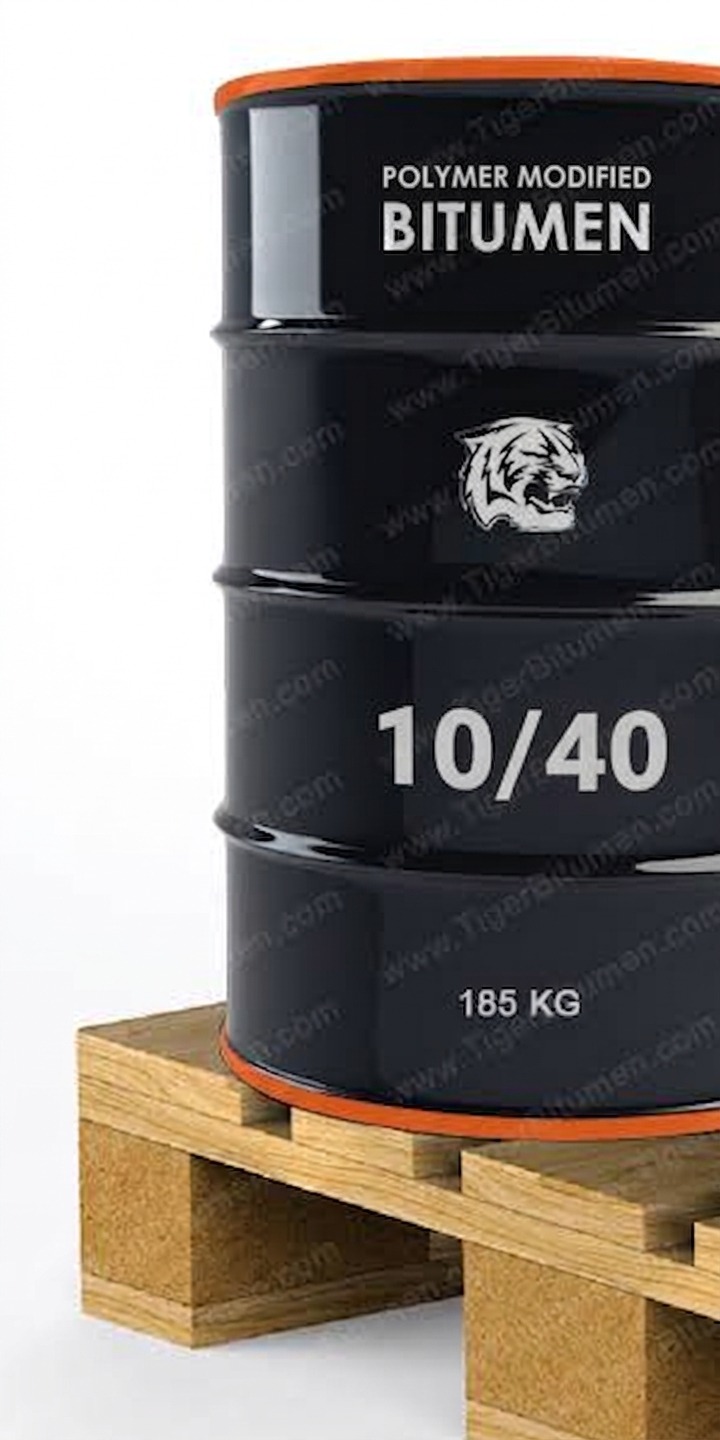
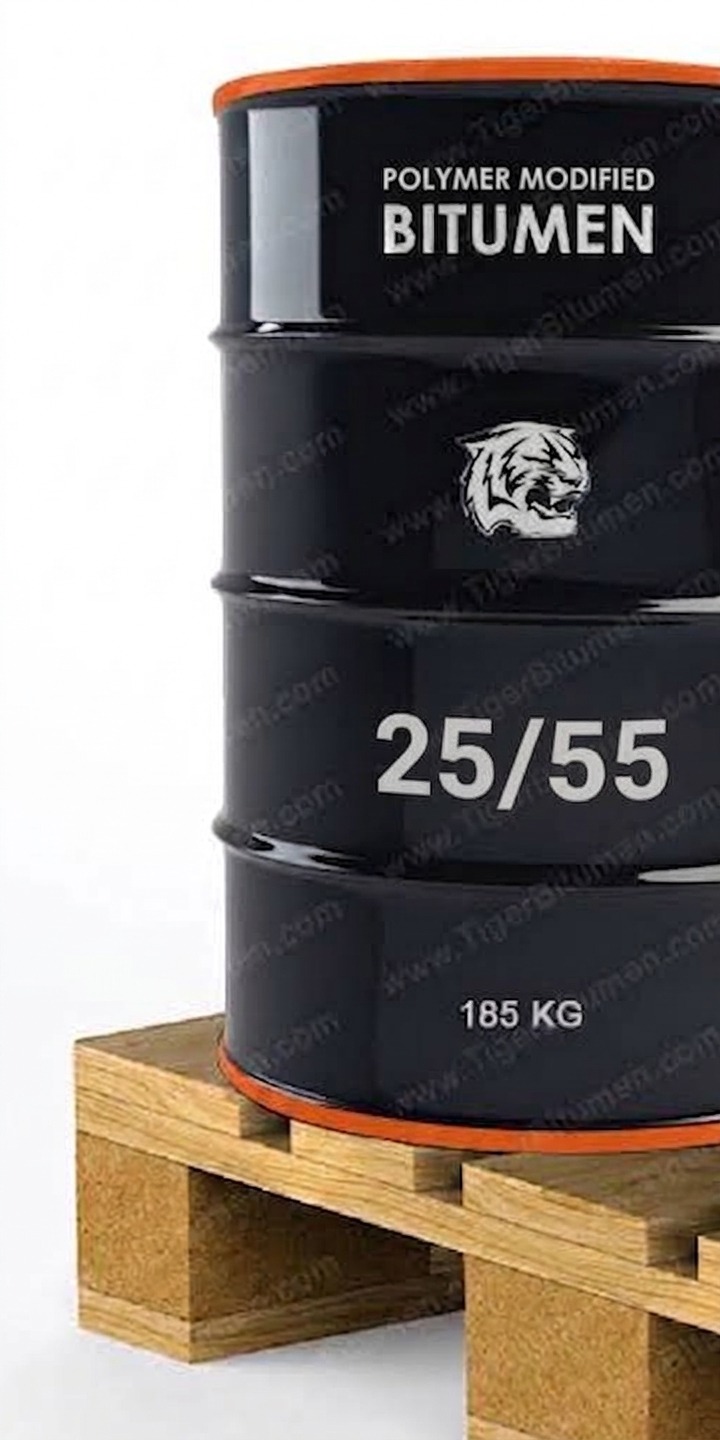
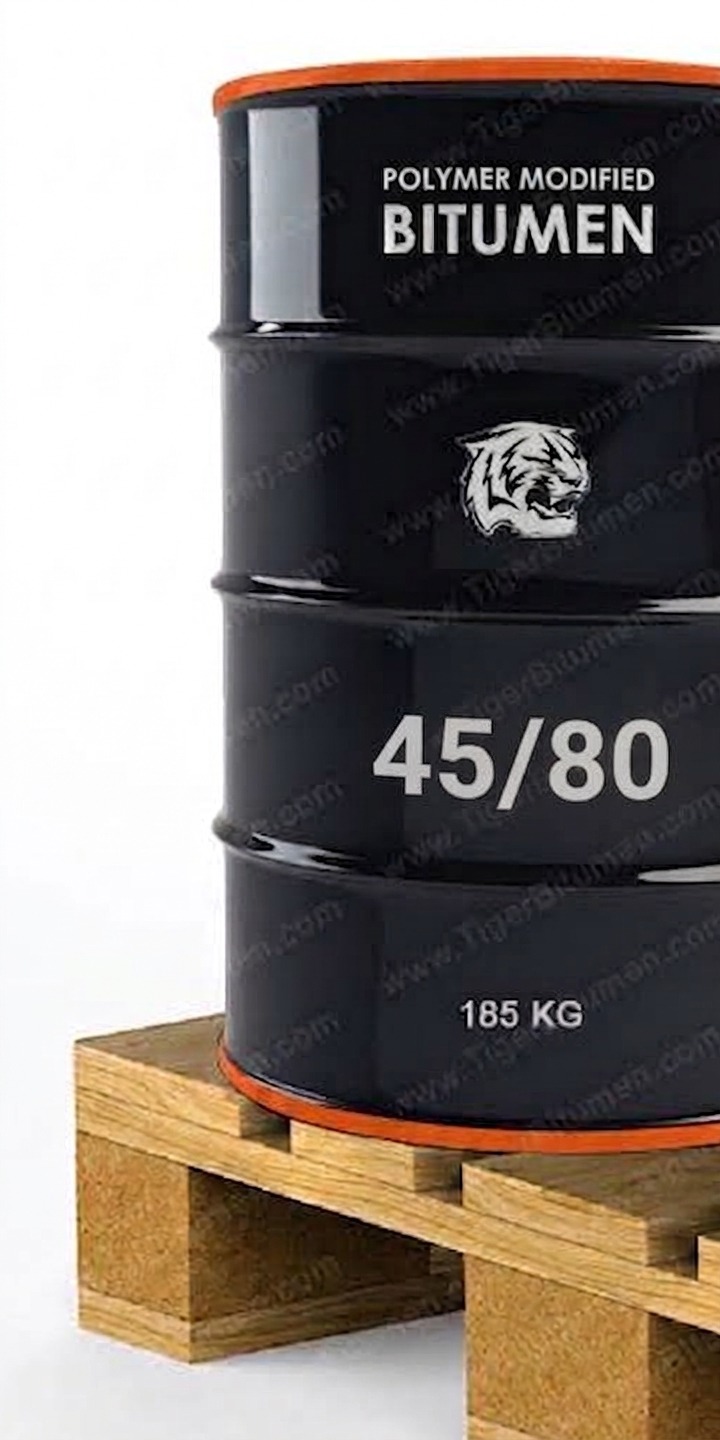
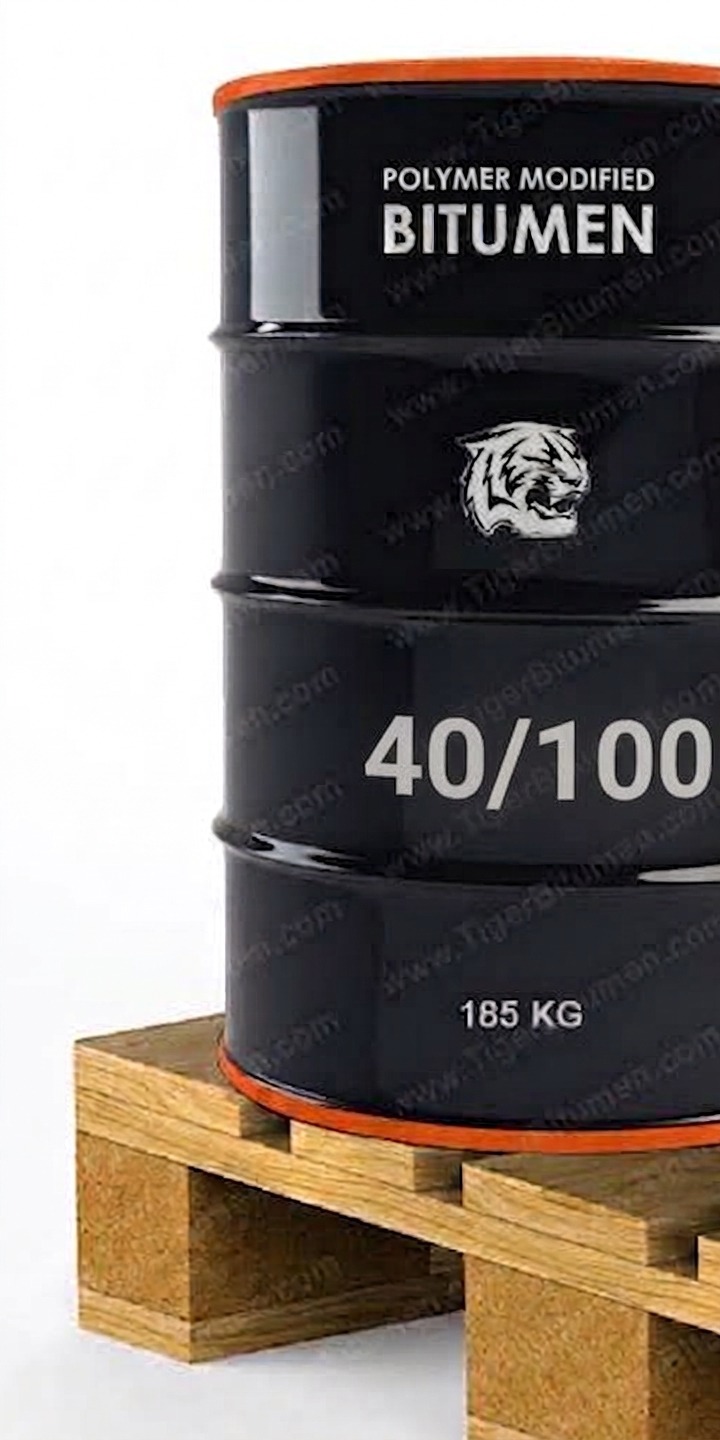
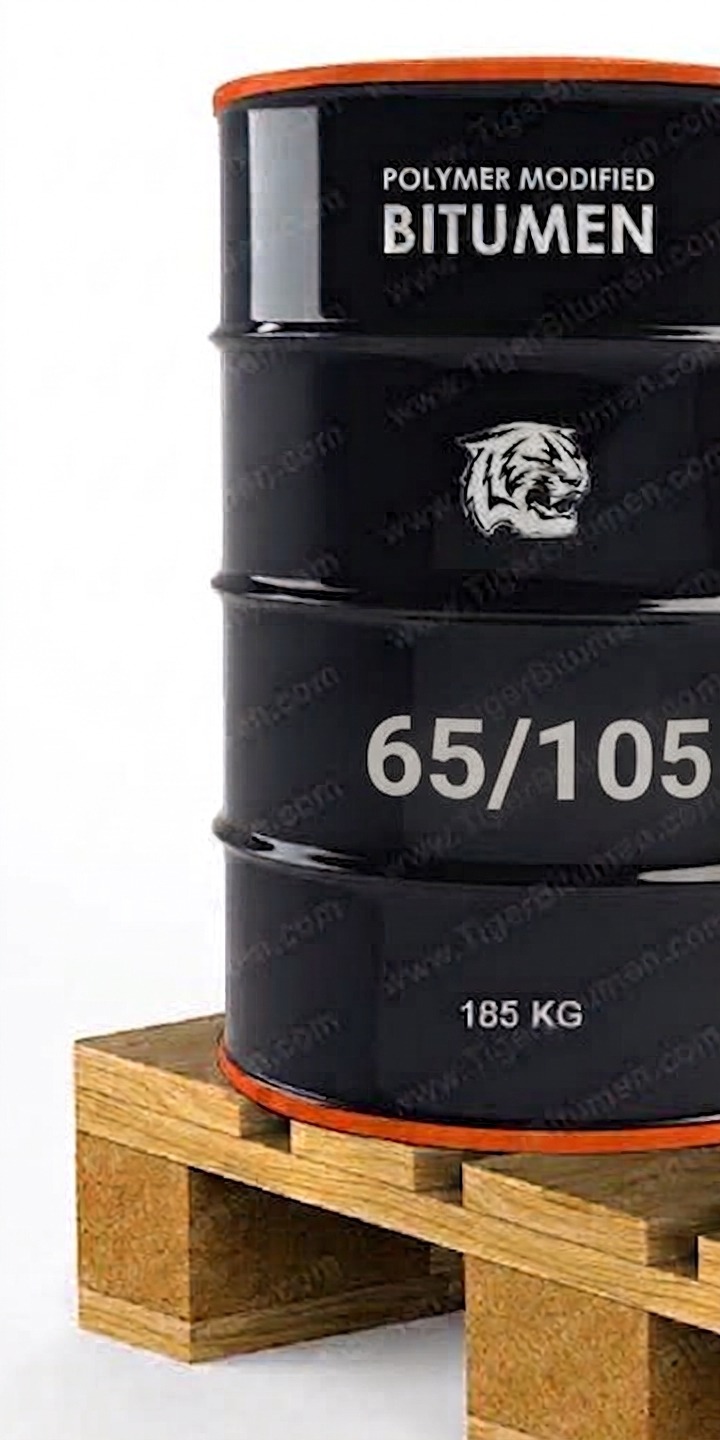
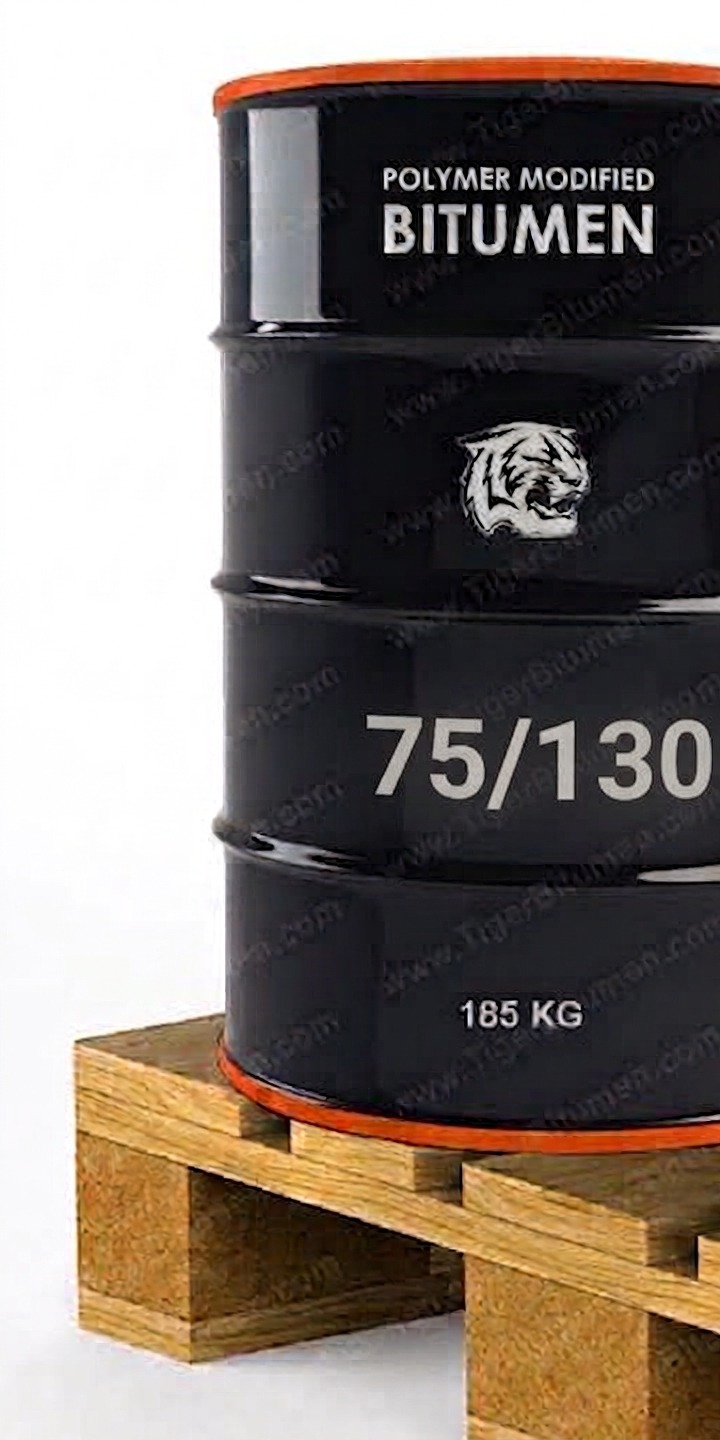
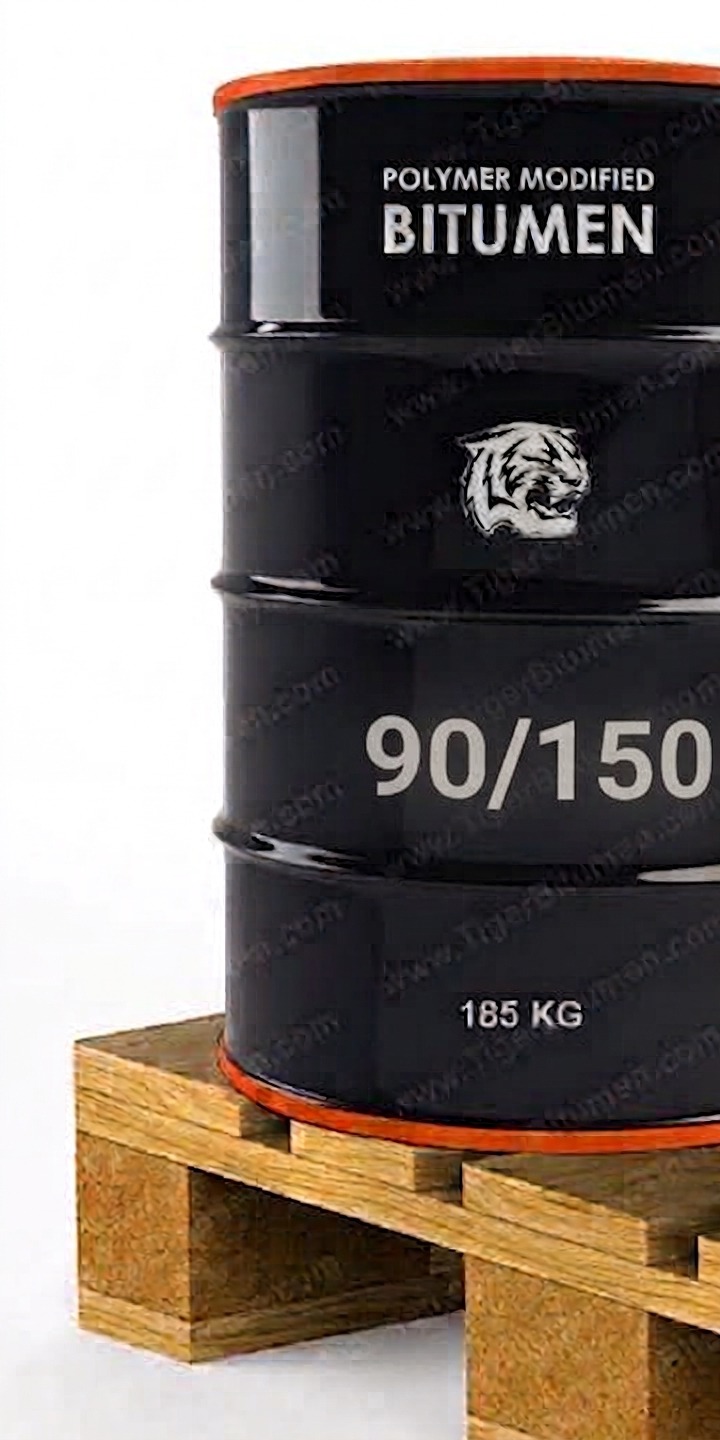
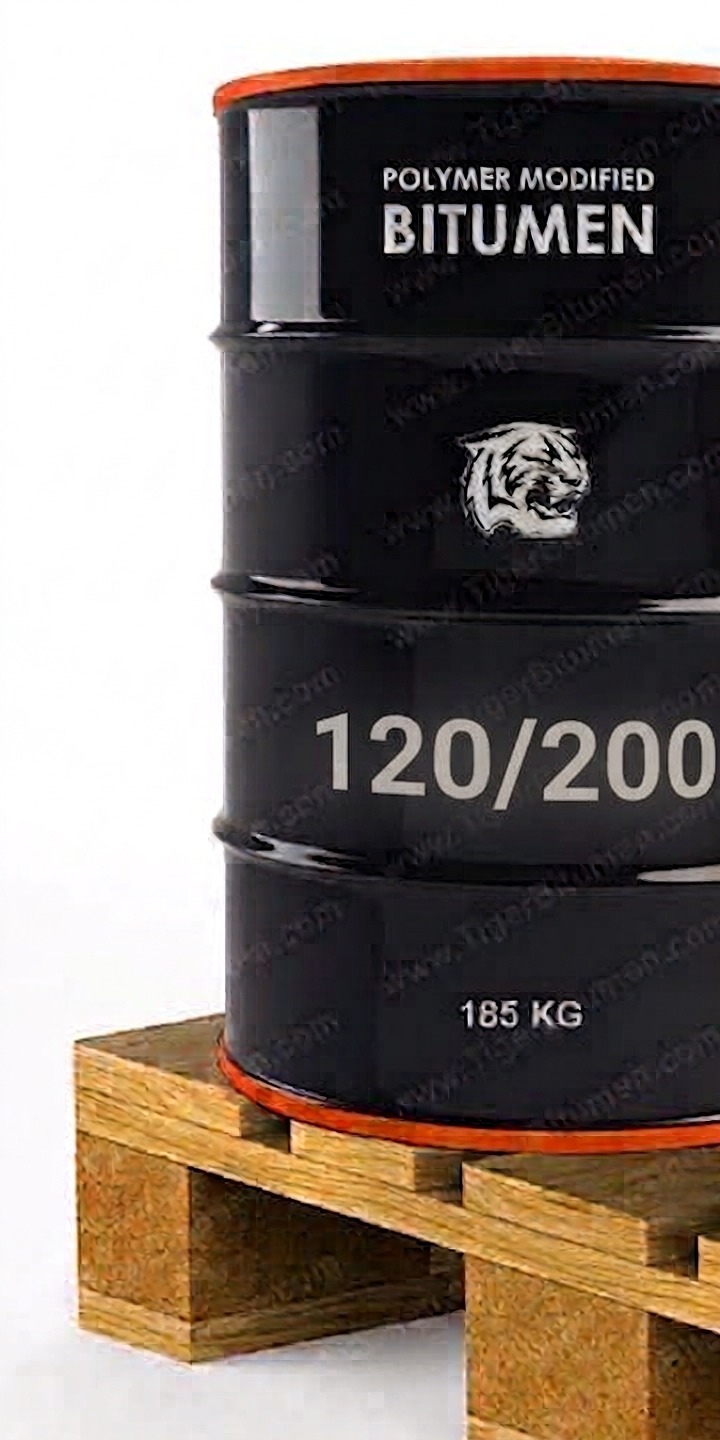
PMB 10/40, 25/55, 45/80, 40/100, 65/105, 75/130, 90/150, 120/200 and 200/300
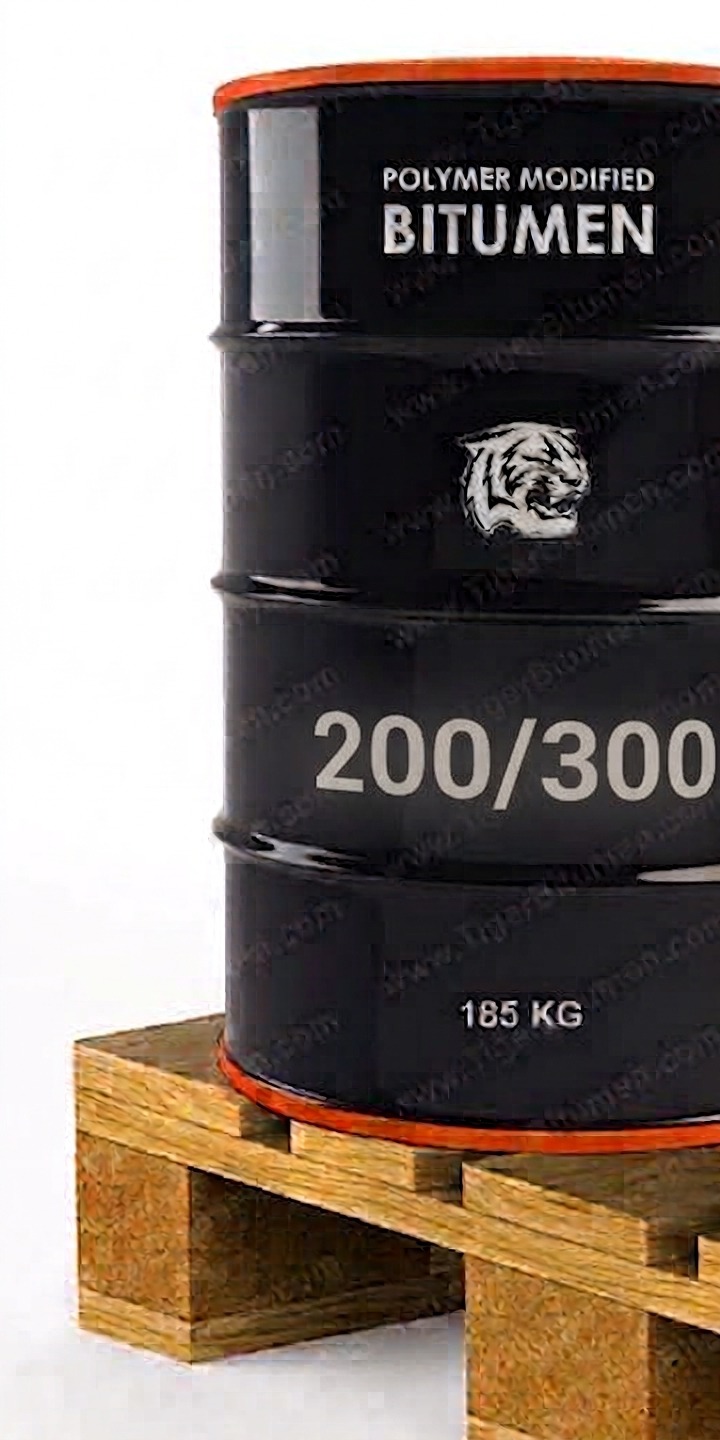
Polymer Modified Bitumen (PMB) is paving bitumen modified with a polymer to improve its performance across a wider range of road temperatures. Polymer Modified Bitumen manufacturers formulate these binders to help asphalt resist rutting in summer, remain flexible in colder conditions, and retain aggregate under heavy traffic. The polymer forms an elastic structure within the binder, improving its response to repeated loading. Tiger Bitumen PMB is specified under the European framework standard EN 14023 and is available in nine penetration grades: PMB 10/40, PMB 25/55, PMB 45/80, PMB 40/100, PMB 65/105, PMB 75/130, PMB 90/150, PMB 120/200 and PMB 200/300.
HY International Group, owner of the Tiger Bitumen brand, manufactures and supplies Polymer Modified Bitumen to the EN 14023 designation set out in each buyer's project specification.


What Is Polymer Modified Bitumen?
Unmodified paving bitumen changes consistency with temperature. In hot weather, it can soften and become more susceptible to deformation. In cold weather, it can become brittle and more vulnerable to cracking. Polymer modification helps address these limitations.
For example, styrene-butadiene-styrene (SBS) is a commonly used polymer. When properly blended with compatible hot bitumen, it can form an elastic structure that improves the binder’s response to loading.
As a result, polymer modified bitumen can provide improved elastic recovery, cohesion and resistance to permanent deformation compared with an unmodified binder. However, actual performance depends on the formulation, grade, testing results and project conditions. The polymer type for each Tiger Bitumen PMB order is agreed at quotation.
How Polymer Modified Bitumen Is Manufactured
Polymer modified bitumen manufacturing requires careful control of the base material, blending conditions and finished-product quality. HY International Group sources the bitumen used across the Tiger Bitumen range from refineries in the Middle East and Southeast Asia. Polymer modification generally involves the following stages:
- Base bitumen selection. First, the base bitumen is assessed for compatibility with the selected polymer. This is important because compatibility affects dispersion and storage stability.
- Polymer dispersion. Next, the polymer is added to heated bitumen and dispersed. Depending on the production process, a high-shear mill may be used to achieve a more uniform blend.
- Blending and conditioning. The blend is maintained under controlled temperature and agitation conditions so the polymer can interact with the bitumen. The required conditions depend on the formulation and production process.
- Quality control. Finally, the finished binder is tested against its declared EN 14023 requirements. Relevant checks may include penetration, softening point, elastic recovery and storage stability, as applicable to the specified product.
PMB Grade Names Explained
An EN 14023 grade designation combines a penetration range with a softening-point requirement. For example, in PMB 45/80-55, the penetration at 25 °C is between 45 and 80 (0.1 mm), while the minimum softening point is 55 °C.
The nine grades listed on this page represent penetration classes. However, the penetration range alone does not provide the complete specification. The applicable softening-point requirement and other performance properties must also be confirmed for the selected product.
Therefore, buyers should compare the complete EN 14023 designation and declared test results rather than selecting a PMB solely by its penetration range.
| Tiger Bitumen Grade | EN 14023 penetration class | Penetration at 25 °C (0.1 mm) | Postion in range |
| PMB 10/40 | Class 2 | 10-40 | Hardest |
| PMB 25/55 | Class 3 | 25-55 | Hard |
| PMB 45/80 | Class 4 | 45-80 | Medium |
| PMB 40/100 | Class 5 | 40-100 | Medium, wide range |
| PMB 65/105 | Class 6 | 65-105 | Medium-soft |
| PMB 75/130 | Class 7 | 75-130 | Soft |
| PMB 90/150 | Class 8 | 90-150 | Soft |
| PMB 120/200 | Class 9 | 120-200 | Very soft |
| PMB 200/300 | Class 10 | 200-300 | Softest |
EN 14023 softening-point classes cover minimum values from 40 °C to 80 °C in 5 °C steps. However, a harder penetration grade does not automatically have a higher softening point. The final properties depend on the formulation and must be verified against the product specification.
EN 14023 Specification Framework
EN 14023 provides the framework for specifying polymer modified bitumen properties. The penetration range identifies the grade, while additional requirements describe other aspects of binder performance.
For procurement, buyers should review the declared requirements, applicable test methods, and product test results. The specific properties and acceptance limits depend on the selected grade and specification.
| Property | Test method | What it tells the buyer |
| Penetration at 25 °C | EN 1426 | Consistency at service temperature; fixes the grade |
| Softening point (Ring & Ball) | EN 1427 | Resistance to softening in hot weather; the grade suffix |
| Cohesion (e.g. force ductility) | EN 13589 + EN 13703 (alternatives: EN 13587, EN 13588) | Internal strength; distinguishes PMB from unmodified bitumen |
| Resistance to hardening (RTFOT) | EN 12607-1 | Mass change, retained penetration and softening point change after short-term ageing |
| Flash point | EN ISO 2592 | Safe heating limit |
| Fraass breaking point | EN 12593 | Brittleness at low temperature |
| Elastic recovery at 25 °C | EN 13398 | How far the binder springs back after stretching; the clearest sign of polymer |
| Storage stability | EN 13399 (with EN 1427 / EN 1426) | Whether the polymer stays evenly dispersed in hot storage |
Benefits of Polymer Modification in Road Construction
Polymer modified bitumen can improve asphalt performance in demanding road conditions. The benefits depend on the binder formulation, aggregate mixture, pavement design and construction quality.
- Rutting resistance. A suitably formulated binder can help asphalt resist permanent deformation in wheel paths, particularly at high pavement temperatures.
- Crack resistance. Improved flexibility and elastic behaviour can help reduce certain forms of thermal and fatigue cracking when the binder is matched to the application.
- Cohesion and aggregate retention. Greater binder cohesion can help retain aggregate in open-graded mixtures and sprayed surface treatments.
- Elastic recovery. The binder can recover part of its deformation after loading. Consequently, this property can be valuable on roads exposed to repeated heavy axle loads.
Applications of Polymer Modified Bitumen
Polymer modified bitumen is used in road construction where the specified binder properties support the required pavement performance. Common applications include:
- Stone mastic asphalt (SMA) and asphalt concrete surface courses on heavily trafficked roads.
- Porous and open-graded asphalt, where binder cohesion helps retain the aggregate structure.
- Thin surface course systems installed over existing pavements.
- Binder and base courses exposed to heavy or slow-moving loads at junctions, bus lanes, ports and industrial yards, where specified.
- Airfield pavements, where the project specification calls for a suitable PMB.
- Hot-applied surface dressing and stress-absorbing membranes, using a grade appropriate to the treatment design.
Choosing a PMB Grade
The correct PMB grade is the one specified for the project. Although climate, traffic loading, and pavement design help guide selection, the penetration range alone is not sufficient to determine suitability.
As a general guide, the following conditions may help buyers identify grades to discuss with their project engineer. However, the final choice should follow the applicable specification and the complete product data.
| Project conditions | Grades usually considered |
| Hot climate, heavy or slow traffic, structural layers | PMB 10/40, PMB 25/55 |
| General surface and binder courses, SMA, porous asphalt | PMB 45/80, PMB 40/100 |
| Temperate or cooler climates, crack-resistant layers | PMB 65/105, PMB 75/130 |
| Sprayed seals, membranes, very cold climates | PMB 90/150, PMB 120/200, PMB 200/300 |
Product Quality
When evaluating polymer modified bitumen, buyers should review the declared EN 14023 requirements, storage stability results and elastic recovery results where applicable. Together, these checks help assess whether the product meets the specified performance requirements.
In addition, handling conditions are important. PMB can be affected by excessive heating and prolonged hot storage, depending on its formulation. Therefore, storage and handling temperatures should remain within the limits provided for the specific product.
PMB or Performance Grade Bitumen?
Polymer Modified Bitumen and Performance Grade (PG) bitumen refer to different aspects of binder specification. PMB identifies bitumen modified with a polymer and specified using the relevant EN 14023 requirements. By contrast, Performance Grade (PG) bitumen classifies a binder according to pavement temperature requirements under AASHTO M 320.
Although polymer modified binders can also be evaluated using a PG specification, the two systems are not interchangeable. Therefore, buyers should follow the classification system stated in their project documents and confirm that the offered product meets all applicable requirements.
Frequently asked questions
What is Polymer Modified Bitumen?
It is paving bitumen blended with a polymer, most commonly SBS, to improve elasticity, cohesion and resistance to rutting and cracking. It is specified under EN 14023.
What is the difference between PMB and penetration grade bitumen?
Both are classified by penetration, but PMB contains a polymer. That gives it elastic recovery and cohesion that unmodified penetration grade bitumen does not have.
Who manufactures Tiger Bitumen PMB?
Tiger Bitumen is the product brand of HY International Group, which manufactures and supplies Tiger Bitumen PMB to the EN 14023 designation in each buyer’s specification.
What does the number after the dash mean, as in PMB 45/80-55?
It is the minimum softening point in °C. The first part, 45/80, is the penetration range at 25 °C.
Which PMB grade should I order?
Order the exact designation in your project specification. Harder grades suit hot climates and heavy traffic, PMB 45/80 and 40/100 cover most surface courses, and softer grades suit cold climates and sprayed work.
Can PMB be produced in a standard asphalt plant?
Yes. PMB is mixed in conventional hot-mix plants, but it needs higher mixing and compaction temperatures than unmodified bitumen and should not be held hot for longer than the product limits allow.
How do I get a price for Tiger Bitumen PMB?
Send the full EN 14023 designation, quantity, destination port and packing preference through the quotation form or WhatsApp.
Request a Tiger Bitumen PMB quotation
Send your EN 14023 designation (for example PMB 45/80-55), quantity in metric tons, destination port and packing preference. The HY International export team replies with price and lead time.
