Specifications of Polymer Modified Bitumen PMB 120/200
PMB 120/200 is a very soft Polymer Modified Bitumen with a penetration range of 120 to 200 (0.1 mm) at 25 °C. It corresponds to Class 9 in the stated EN 14023 classification. This grade mainly serves sealing applications rather than structural strength.
Because of its soft consistency, the binder can wet aggregate during suitable spraying operations. Moreover, its polymer modification helps the binder film hold chippings, accommodate movement, and limit water entry into the pavement. It can also suit asphalt work in very cold regions, where a firmer binder may become too brittle for the intended application.
Within the Tiger Bitumen Polymer Modified Bitumen range, PMB 120/200 sits between PMB 90/150 and the softer PMB 200/300. Therefore, buyers should compare the complete product designation and declared properties before selecting a grade.
Tiger Bitumen is the product brand of HY International Group. Export enquiries for PMB 120/200 are assessed against the complete EN 14023 designation and the property classes stated in the buyer’s project specification.
Tiger Brand PMB 120/200 Specifications (EN 14023)
| Property | Requirement for PMB 120/200 | Test method |
| Penetration at 25 °C, 0.1 mm | 120–200 (EN 14023 Class 9) | EN 1426 |
| Softening point (Ring & Ball), °C | Declared minimum; written after the dash in the full designation | EN 1427 |
| Cohesion, J/cm² | Declared class and method; confirmed against the product specification | EN 13589 + En 13703, EN 13588 or EN 13587 |
| Resistance to hardening – change of mass, % | Declared class; confirmed against the product specification | EN 12607-1 |
| Resistance to hardening – retained penetration, % | Declared class; confirmed against the product specification | EN 12607-1 + EN 1426 |
| Resistance to hardening – increase in softening point, °C | Declared class; confirmed against the product specification | EN 12607-1 + EN 1427 |
| Flash point, °C | Declared class; confirmed against the product specification | EN ISO 2592 |
| Fraass breaking point, °C | Declared class; confirmed against the product specification | EN 12593 |
| Elastic recovery at 25 °C, % | Declared class; confirmed against the product specification | EN 13398 |
| Storage stability – difference in softening point, °C | Declared class; confirmed against the product specification | EN 13399 + EN 1427 |
The PMB 120/200 name defines its penetration range. However, it does not establish every performance requirement. The applicable specification must also state the softening point, cohesion method and class, and other required property classes.
Requirements for soft sealing binders can vary between markets and projects. Therefore, confirm the complete designation and each applicable property class against the relevant product specification before accepting an order.
The Softening Point Margin on a Very Soft Grade
For a binder this soft, the declared softening point helps buyers assess the risk of bleeding and tracking in warm weather. The full designation may be written as PMB 120/200, where represents the declared minimum softening point in °C, if that format applies to the product specification.
Before selecting the binder, assess the following site conditions:
| Site factor | Why it matters for PMB 120/200 |
| Highest expected road surface temperature | Sets how much softening point margin the binder needs to avoid bleeding |
| Traffic speed and stopping | Slow, braking and turning traffic works soft binder films harder than free-flowing traffic |
| Shade and exposure | Exposed, dark surfaces run hotter than shaded sections of the same road |
| Lowest expected temperature | Confirms that the soft grade is needed at all; the declared Fraass class should match |
PMB 120/200 Properties
- Low working viscosity. Its very soft consistency can support spraying and aggregate wetting at suitable application temperatures.
- Cohesive, elastic films. The polymer helps the binder film hold chippings and recover after deformation. As a result, it can offer properties that plain soft bitumen may not provide to the same extent.
- Low-temperature flexibility. This grade may suit projects in severe winter conditions and areas with repeated freeze–thaw cycles, subject to the declared performance classes.
- Surface sealing. A continuous binder film can help seal fine cracks and limit water entry into the pavement below.
Applications of PMB 120/200
- Hot-applied surface dressing and chip seals, where the project specification calls for a very soft modified binder.
- Stress-absorbing membranes on cracked pavements.
- Road resealing programmes that aim to improve waterproofing and restore surface texture on ageing roads.
- Asphalt applications in very cold climates, where the specified performance requirements call for a soft modified binder.
Selecting PMB 120/200
PMB 120/200 may suit sealing work and certain cold-climate applications. However, the project specification always takes priority. Use the following comparison as a general guide when evaluating alternatives:
| If the project needs… | Consider |
| A very soft hot-applied modified binder for seals, membranes or very cold climates | PMB 120/200 |
| A firmer sprayed binder for busier roads with medium to heavy traffic | PMB 90/150 |
| The softest modified binder for the coldest sites | PMB 200/300 |
| A binder applied without full hot-binder heating | Emulsion Bitumen or Cutback Bitumen |
| An unmodified soft binder | Bitumen 160/220 |
Manufacturing and Export of Very Soft PMB
Very soft PMB needs careful production control because the polymer contributes to the binder’s strength and elasticity. First, the manufacturer must select a compatible base bitumen. Next, the production process must disperse and mature the polymer properly.
The finished binder must also remain homogeneous during storage. This consistency helps maintain uniform performance throughout the tank. In addition, maintenance and resealing programmes often operate within tight seasonal windows, so delivery timing and storage stability matter alongside technical compliance.
For an export quotation, provide the complete designation, the required cohesion method and class, all other specified property classes, the order quantity, the destination port and the planned works season. HY International Group’s export team can then check these requirements against the relevant product specification before preparing a quotation.
Handling PMB 120/200
PMB 120/200 may reach spraying viscosity at lower temperatures than firmer PMB grades. Nevertheless, always follow the heating and application temperatures stated in the specific product documentation.
Avoid local overheating around heating coils, and keep hot storage periods short to help protect the polymer. For new seals, restrict traffic speeds until the binder has cooled and the chippings have settled, in line with the project method statement.
PMB 120/200 FAQs
What is PMB 120/200?
PMB 120/200 is a polymer modified bitumen with a penetration of 120 to 200 (0.1 mm) at 25 °C. It is Class 9 in EN 14023 and is used mainly for sprayed seals, membranes and very cold climates.
What is PMB 120/200 mainly used for?
Sprayed applications such as surface dressing, resealing and stress-absorbing membranes, and asphalt in very cold regions.
Is PMB 120/200 suitable for heavy traffic in hot climates?
Not usually. Very soft binders are prone to bleeding in heat; harder grades such as PMB 45/80 or PMB 25/55 are normally used there.
How is PMB 120/200 different from PMB 90/150?
PMB 120/200 is softer and sprays at lower temperatures. PMB 90/150 is firmer and is more often chosen for seals on busier roads.
How does PMB 120/200 compare with Bitumen 160/220?
Both are soft binders, but PMB 120/200 is polymer modified and has elastic recovery and cohesion that unmodified Bitumen 160/220 does not have.
Why does the softening point matter so much for PMB 120/200?
Because the binder is very soft, the declared softening point is its main safeguard against bleeding in warm weather. It must suit the highest expected road surface temperature.
What details are needed for a PMB 120/200 export quotation?
The complete EN 14023 designation, the cohesion method and class, other required property classes, quantity in metric tons, destination port, packing preference and planned works season.
Request a Tiger Bitumen PMB 120/200 quotation
Send the complete designation including the softening point class, the cohesion method your specification uses, quantity in metric tons, destination port and packing preference. The HY International export team replies with price and lead time.


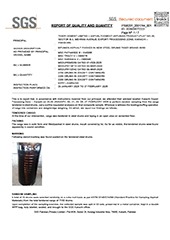
SGS Inspection Report Grade 35/50 Loading the Month of Jan-Feb 2026
Tiger Bitumen Price List
English Version
French Version