Specifications of Polymer Modified Bitumen PMB 200/300
PMB 200/300 is a very soft polymer modified bitumen grade with a penetration range of 200 to 300 (0.1 mm) at 25 °C. It belongs to the soft end of the PMB range and serves specialist applications. In particular, engineers may consider it when low-temperature flexibility and workability are important.
Polymer modification can improve cohesion and elastic recovery. However, the complete product designation and declared properties must match the project specification. PMB 200/300 sits at the soft end of the Tiger Bitumen range, alongside grades such as PMB 10/40. It is the final grade in the Tiger Bitumen Polymer Modified Bitumen range, following PMB 120/200.
Tiger Bitumen is the product brand of HY International Group. For PMB 200/300 export enquiries, the team checks the complete EN 14023 designation and required property classes against the buyer’s project specification.
Tiger Brand PMB 200/300 Specifications (EN 14023)
| Property | Requirement for PMB 200/300 | Test method |
| Penetration at 25 °C, 0.1 mm | 200–300 (EN 14023 Class 10) | EN 1426 |
| Softening point (Ring & Ball), °C | Declared minimum; written after the dash in the full designation | EN 1427 |
| Cohesion, J/cm² | Declared class and method; confirmed against the product specification | EN 13589 + EN 13703, EN 13588 or EN 13587 |
| Resistance to hardening – change of mass, % | Declared class; confirmed against the product specification | EN 12607-1 |
| Resistance to hardening – retained penetration, % | Declared class; confirmed against the product specification | EN 12607-1 + EN 1426 |
| Resistance to hardening – increase in softening point, °C | Declared class; confirmed against the product specification | EN 12607-1 + EN 1427 |
| Flash point, °C | Declared class; confirmed against the product specification | EN ISO 2592 |
| Fraass breaking point, °C | Declared class; confirmed against the product specification | EN 12593 |
| Elastic recovery at 25 °C, % | Declared class; confirmed against the product specification | EN 13398 |
| Storage stability – difference in softening point, °C | Declared class; confirmed against the product specification | EN 13399 + EN 1427 |
The PMB 200/300 grade name specifies the penetration range. However, it does not establish every performance property. The complete designation follows the format PMB 200/300-xx, where xx represents the declared minimum softening point in °C.
In addition, the product specification defines the applicable cohesion method and other property classes. Confirm the complete designation and all required classes before accepting an order. The project specification should also determine which cohesion test method applies.
PMB 200/300 at the End of the PMB Range
PMB grades cover a range of penetration classes, from harder binders to very soft specialist grades. PMB 200/300 has a penetration range of 200 to 300 (0.1 mm). Therefore, engineers should assess its suitability against the intended application, climate and required performance properties.
| Grade | EN 14023 class | penetration at 25 °C (0.1 mm) | Typical role |
| PMB 10/40 | Class 2 | 10-40 | Stiff structural layers |
| PMB 25/55 | Class 3 | 25-55 | Heavy traffic, hot climates |
| PMB 45/80 | Class 4 | 45-80 | General surface courses |
| PMB 40/100 | Class 5 | 40-100 | Highly modified surfacings |
| PMB 65/105 | Class 6 | 65-105 | Crack-resistant layers |
| PMB 75/130 | Class 7 | 75-130 | Cold-climate asphalt |
| PMB 90/150 | Class 8 | 90-150 | Sprayed seals on busier roads |
| PMB 120/200 | Class 9 | 120-200 | Seals and membranes |
| PMB 200/300 | Class 10 | 200-300 | Specialist sprayed work, very cold climates |
Is PMB 200/300 the Right Grade?
Because PMB 200/300 has a very soft consistency, engineers should select it carefully. First, check whether the project specification names this grade or requires properties that it can meet.
- The project specification names PMB 200/300 or requires a binder in the relevant penetration range.
- The site experiences very cold winters, and the declared properties suit the expected summer pavement temperatures.
- The work involves sprayed seals, sealing layers or another application specified for this binder.
- The project requires a hot-applied modified binder that meets defined handling and performance requirements.
However, very soft consistency alone does not establish suitability. For roads with heavy, slow-moving traffic or high summer pavement temperatures, engineers should compare the required properties of PMB 120/200 and PMB 90/150 against the project specification before choosing a grade.
Applications of PMB 200/300
- Surface dressing and chip seals in cold regions, where the project specification calls for a binder with this consistency.
- Sealing and membrane layers that require flexibility at very low temperatures, subject to the declared properties.
- Asphalt applications on lightly trafficked roads in very cold climates, where the engineer specifies this grade.
- Other specialist projects that explicitly require the relevant EN 14023 properties.
Selecting PMB 200/300
The project specification should determine the final binder selection. Use the following comparison as a general guide, and check the complete designation and declared properties before making a decision.
| If the project needs… | Consider |
| The softest hot-applied modified binder, for very cold sites or specialist sprayed work | PMB 200/300 |
| A very soft modified binder with a little more heat resistance | PMB 120/200 |
| A sprayed modified binder for busier roads | PMB 90/150 |
| A cold-applied or solvent-thinned binder | Emulsion Bitumen or Cutback Bitumen |
| A soft unmodified paving grade | Bitumen 160/220 |
Manufacturing and Export of PMB 200/300
Producing a consistent soft PMB requires a compatible base bitumen and effective polymer dispersion. These factors help the binder achieve the properties declared in its specification.
Storage stability also matters. If the binder separates during storage, its performance may change. Therefore, exporters and buyers should check the declared storage-stability class and confirm that it suits the expected transport, storage and reheating conditions.
PMB 200/300 is a specialist grade, so prepare export enquiries carefully. Include the complete designation, the required cohesion method and class, all other specified properties, the order quantity and the destination port.
In addition, provide the planned works season and any relevant temperature requirements. HY International Group’s export team can review these details against the applicable product specification before confirming availability, lead time and quotation details.
Handling PMB 200/300
PMB 200/300 requires controlled heating during pumping, mixing and spraying. However, the correct operating temperature depends on the specific formulation and its approved handling guidance.
Follow the product’s stated temperature limits, heat the binder evenly and avoid prolonged hot storage. Excessive heat can degrade the polymer and affect performance. Finally, manage traffic on finished work according to the project requirements and allow the binder to cool sufficiently before opening the area to normal traffic.
PMB 200/300 FAQs
What is PMB 200/300?
PMB 200/300 is a polymer modified bitumen with a penetration of 200 to 300 (0.1 mm) at 25 °C. It is Class 10, the softest penetration class in EN 14023.
What makes PMB 200/300 different from the other PMB grades?
It is the softest grade, so it is chosen for sprayed work and very cold climates rather than for structural asphalt layers.
Can PMB 200/300 be used on busy roads?
Only where the specification allows it for the climate and traffic. Soft binders have limited resistance to rutting and bleeding in warm weather.
Why choose PMB 200/300 over a soft unmodified bitumen?
The polymer adds cohesion and elastic recovery, which improves stone retention and durability compared with a soft unmodified grade such as Bitumen 160/220.
How is PMB 200/300 different from PMB 120/200?
PMB 200/300 is softer, with a penetration range starting at 200. PMB 120/200 has more resistance to warm weather and is the more common choice for seals and membranes.
Is PMB 200/300 always in stock?
Availability depends on the designation and quantity. Send your requirement early and the quotation will state the lead time.
What should I send to request a PMB 200/300 export quotation?
The complete EN 14023 designation, the cohesion method and class, other required property classes, quantity in metric tons, destination port, packing preference and planned works season.
Request a Tiger Bitumen PMB 200/300 quotation
Send the complete designation including the softening point class, the cohesion method your specification uses, quantity in metric tons, destination port and packing preference. The HY International export team replies with price, availability and lead time.


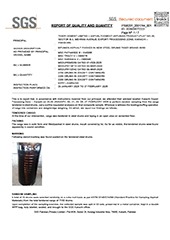
SGS Inspection Report Grade 35/50 Loading the Month of Jan-Feb 2026
Tiger Bitumen Price List
English Version
French Version