Specifications of Polymer Modified Bitumen PMB 90/150
PMB 90/150 is a soft polymer modified bitumen with a penetration range of 90 to 150 (0.1 mm) at 25 °C. It corresponds to Class 8 in the stated EN 14023 classification. Unlike harder PMB grades that often serve asphalt applications, this grade commonly supports sprayed sealing work.
Its soft consistency allows the binder to form a thin hot film that wets and grips aggregate chippings. In addition, the polymer improves the film’s cohesion and elasticity, helping it hold stones under traffic. PMB 90/150 can also suit stress-absorbing membranes and certain asphalt applications in very cold climates.
Within the Tiger Bitumen Polymer Modified Bitumen range, this grade sits between PMB 75/130 and the softer PMB 120/200. Therefore, buyers should compare the full designation and declared properties before selecting a grade.
Tiger Bitumen is the product brand of HY International Group. For PMB 90/150 export enquiries, the team uses the complete EN 14023 designation and the property classes stated in the buyer’s project specification.
Tiger Brand PMB 90/150 Specifications (EN 14023)
| Property | Requirement for PMB 90/150 | Test method |
| Penetration at 25 °C, 0.1 mm | 90–150 (EN 14023 Class 8) | EN 1426 |
| Softening point (Ring & Ball), °C | Declared minimum; the suffix of the full designation | EN 1427 |
| Cohesion, J/cm² | Declared class and method; confirmed against the product specification | EN 13589 + En 13703, or EN 13588 (Vialit pendulum), or EN 13587 |
| Resistance to hardening – change of mass, % | Declared class; confirmed against the product specification | EN 12607-1 |
| Resistance to hardening – retained penetration, % | Declared class; confirmed against the product specification | EN 12607-1 + EN 1426 |
| Resistance to hardening – increase in softening point, °C | Declared class; confirmed against the product specification | EN 12607-1 + EN 1427 |
| Flash point, °C | Declared class; confirmed against the product specification | EN ISO 2592 |
| Fraass breaking point, °C | Declared class; confirmed against the product specification | EN 12593 |
| Elastic recovery at 25 °C, % | Declared class; confirmed against the product specification | EN 13398 |
| Storage stability – difference in softening point, °C | Declared class; confirmed against the product specification | EN 13399 + EN 1427 |
The PMB 90/150 name defines its penetration range. However, it does not establish every performance requirement. The applicable specification must also state the softening point, the cohesion method and class, and all other required property classes.
EN 14023 offers different options for certain performance properties. Therefore, confirm the complete designation and each applicable property class against the relevant product specification before accepting an order.
Choosing the Cohesion Test for Sprayed Work
EN 14023 provides more than one method for measuring cohesion. The most suitable method depends on the binder’s intended use and the project requirements.
For asphalt binders, specifications often use force ductility testing under EN 13589 with EN 13703. By comparison, surface dressing specifications may call for the Vialit pendulum test under EN 13588. This test measures the energy needed to break a thin binder film, so it can help assess how well a sprayed seal holds its chippings.
Before comparing PMB 90/150 offers, check which cohesion method the project specification names. Results from different test methods are not directly comparable.
The full designation follows the pattern PMB 90/150-xx, where xx represents the declared minimum softening point in °C, where that designation format applies. Always copy the designation from the relevant product specification.
How PMB 90/150 Works in a Surface Dressing
- The contractor sprays hot binder onto the prepared road surface at the application rate set by the seal design.
- Next, the contractor spreads aggregate chippings while the binder remains fluid enough to wet them.
- Rolling then seats the chippings into the binder film.
- Early life. During the first weeks of traffic, the chippings settle and interlock. Meanwhile, the polymer’s cohesion and elasticity help hold them in place during this vulnerable stage, when unmodified binders may experience greater stone loss.
PMB 90/150 Properties
- Sprayable soft consistency. The binder can reach a workable spraying viscosity at lower temperatures than harder PMB grades, subject to the product instructions.
- Chipping retention. Its cohesion and elasticity can help resist early stone loss on trafficked roads.
- Crack sealing. A thin, elastic film can bridge fine cracks in the existing surface and limit water entry.
- Limited summer margin. Soft binders can bleed in hot weather. Therefore, the declared softening point class must suit the site’s temperature and traffic conditions.
Applications of PMB 90/150
- Hot-applied surface dressing and chip seals on roads with medium to heavy traffic, where the specification calls for this grade.
- Stress-absorbing membranes (SAM) applied directly to cracked pavements.
- Asphalt layers in very cold climates that require a soft modified binder.
- Road maintenance treatments that seal and waterproof ageing surfaces.
Selecting PMB 90/150
PMB 90/150 can suit hot-applied sprayed work on busier roads. However, the project specification always takes priority. Use the following comparison as a general guide when assessing alternatives:
| If the project needs… | Consider |
| A hot-applied modified binder for surface dressing or a stress-absorbing membrane | PMB 90/150 |
| A slightly firmer soft binder for asphalt in cold or high-altitude regions | PMB 75/130 |
| A softer binder with a lower spraying viscosity for very cold conditions | PMB 120/200 |
| A cold-applied, water-based binder for sprayed work | Emulsion Bitumen |
| An unmodified soft binder of similar consistency | Bitumen 100/120 |
Supplying PMB 90/150 for Sprayed-Seal Programmes
Surface dressing work depends on the season and weather. Consequently, buyers need the binder ready when the spraying window opens.
A soft PMB must remain homogeneous during transport, storage and reheating. For this reason, the declared storage stability class matters alongside penetration. Manufacturers also need a compatible base bitumen and a well-controlled process that disperses the polymer fully. Together, these measures help the binder spray evenly.
For an export quotation, provide the complete designation, the required cohesion method and class, all other specified property classes, the quantity, the destination port and the planned spraying season. HY International Group’s export team can check these details against the relevant product specification before preparing a quotation.
Handling PMB 90/150
Before spraying, heat the binder until it reaches the spraying viscosity stated in the product instructions. If the binder is too cold, it may not wet the chippings properly. Conversely, excessive heat can degrade the polymer and reduce the cohesion that helps hold the seal together.
To protect the binder, heat it evenly and avoid local overheating around heating coils. Also, follow the specified hot-storage limits and ensure that the sprayer bars and nozzles are clean and at the required temperature before work begins.
PMB 90/150 FAQs
What is PMB 90/150?
PMB 90/150 is a polymer modified bitumen with a penetration of 90 to 150 (0.1 mm) at 25 °C. It is Class 8 in EN 14023 and is used mainly for hot-applied sprayed work.
Why use PMB 90/150 for surface dressing instead of unmodified bitumen?
The polymer improves cohesion and elasticity, which helps hold chippings in place under traffic and reduces early stone loss.
Which cohesion test applies to PMB 90/150?
It depends on the specification. EN 14023 allows force ductility (EN 13589 with EN 13703), the Vialit pendulum test (EN 13588) or the tensile test (EN 13587). Surface dressing specifications often use the Vialit pendulum.
What is the difference between PMB 90/150 and PMB 75/130?
PMB 90/150 is softer. It is chosen for sprayed work or colder conditions where a lower spraying viscosity helps, while PMB 75/130 is used more often in asphalt.
Is PMB 90/150 the same as a polymer modified emulsion?
No. PMB 90/150 is a hot-applied binder. Emulsions are water-based products applied at lower temperatures; see our Emulsion Bitumen range.
How does PMB 90/150 compare with Bitumen 100/120?
Their consistencies overlap, but PMB 90/150 has the elastic recovery and cohesion of a modified binder, which unmodified Bitumen 100/120 does not have.
What should I send to request a PMB 90/150 export quotation?
The complete EN 14023 designation, the required cohesion method and class, other property classes, quantity in metric tons, destination port, packing preference and planned spraying season.
Request a Tiger Bitumen PMB 90/150 quotation
Send the complete designation including the softening point class, the cohesion method your specification uses, quantity in metric tons, destination port and packing preference. The HY International export team replies with price and lead time.


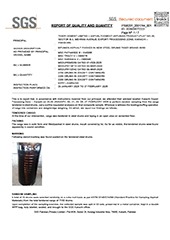
SGS Inspection Report Grade 35/50 Loading the Month of Jan-Feb 2026
Tiger Bitumen Price List
English Version
French Version