Specifications of Polymer Modified Bitumen PMB 75/130
PMB 75/130 is a soft polymer modified bitumen grade with a penetration range of 75 to 130 (0.1 mm) at 25 °C. It is considered for roads in cold regions and high-altitude areas, where low-temperature flexibility is important. However, the complete product designation and declared properties must match the project specification.
The softer base binder can help maintain flexibility during cold weather. Meanwhile, polymer modification can improve cohesion and elastic recovery compared with unmodified bitumen of similar penetration. Therefore, engineers may consider this grade for suitable surfacings and maintenance layers. It follows PMB 65/105 and comes before the sprayed-work grade PMB 90/150 in the Tiger Bitumen Polymer Modified Bitumen range.
Tiger Bitumen is the product brand of HY International Group. For every PMB 75/130 export enquiry, the team checks the complete EN 14023 designation and property classes against the buyer’s project specification.
Tiger Brand PMB 75/130 Specifications (EN 14023)
| Property | Requirement for PMB 75/130 | Test method |
| Penetration at 25 °C, 0.1 mm | 75–130 (EN 14023 Class 7) | EN 1426 |
| Softening point (Ring & Ball), °C | Declared minimum; written after the dash in the full designation | EN 1427 |
| Cohesion – force ductility, J/cm² | Declared class; confirmed against the product specification | EN 13589 + EN 13703 |
| Resistance to hardening – change of mass, % | Declared class; confirmed against the product specification | EN 12607-1 |
| Resistance to hardening – retained penetration, % | Declared class; confirmed against the product specification | EN 12607-1 + EN 1426 |
| Resistance to hardening – increase in softening point, °C | Declared class; confirmed against the product specification | EN 12607-1 + EN 1427 |
| Flash point, °C | Declared class; confirmed against the product specification | EN ISO 2592 |
| Fraass breaking point, °C | Declared class; confirmed against the product specification | EN 12593 |
| Elastic recovery at 25 °C, % | Declared class; confirmed against the product specification | EN 13398 |
| Storage stability – difference in softening point, °C | Declared class; confirmed against the product specification | EN 13399 + EN 1427 |
The PMB 75/130 name specifies the penetration range, but it does not define every performance property. Instead, the full designation identifies the required softening point and other applicable property classes. Therefore, confirm the complete designation against the relevant product specification before placing an order.
In addition, follow the test method stated in the project specification. For example, a project may specify a tensile test (EN 13587) or the Vialit pendulum method (EN 13588) for cohesion instead of force ductility.
Writing the Full PMB 75/130 Designation
Contract documents may show the minimum softening point after the penetration range. The format is PMB 75/130-xx, where xx represents the declared softening point class in °C.
For example, a suffix of 50 indicates a minimum softening point of 50 °C when that designation applies. However, the correct suffix depends on the specified product properties and intended use. Always copy the complete designation from the project specification rather than assuming a value.
Where PMB 75/130 Sits in the Soft End of the Range
PMB 65/105, PMB 75/130 and PMB 90/150 have overlapping penetration ranges. However, each grade may serve a different purpose depending on the project specification, climate, and required binder properties.
| Grade | Penetration at 25 °C (0.1 mm) | Typical role |
| PMB 65/105 | 65-105 | Crack-resistant surface courses and interlayers in temperate and cooler climates |
| PMB 75/130 | 75-130 | Asphalt and surfacings in cold and high-altitude regions; flexible maintenance layers |
| PMB 90/150 | 90-150 | Hot-applied sprayed seals and membranes; asphalt in very cold climates |
PMB 75/130 Properties
- Flexibility at low temperatures. The soft base binder may help reduce thermal-cracking risk during cold winters and freeze–thaw cycles, subject to the declared properties.
- Elastic recovery. Elastic recovery measures how well the binder returns after stretching. Consequently, engineers can use this property when assessing applications involving pavement movement.
- Workability in cool conditions. The softer consistency may support paving operations in cooler weather. However, the product’s specified handling and compaction temperatures still apply.
- Performance in hot weather. Softer binders may offer less resistance to rutting and bleeding under high pavement temperatures. Therefore, check the declared softening point and other relevant properties against local conditions.
Applications of PMB 75/130
- Asphalt surface courses on roads in cold climates and high-altitude areas, where the specification permits this grade.
- Stress-absorbing membranes and interlayers over cracked or flexible pavements, when specified by the pavement designer.
- Maintenance overlays on flexible pavements with existing cracks.
- Hot-applied surface dressing where the project specification requires a modified binder of this consistency.
Selecting PMB 75/130
Consider PMB 75/130 when low-temperature flexibility is a priority, and the declared properties suit the expected summer pavement temperatures. However, the project specification always takes precedence. Use the following guide only to compare potential options.
| If the project needs… | Consider |
| A soft modified binder for asphalt surfacings in a cold or high-altitude region | PMB 75/130 |
| A slightly firmer crack-resistant binder for temperate or cooler climates | PMB 65/105 |
| A softer binder for hot-applied sprayed seals and membranes | PMB 95/150 |
| A general-purpose modified binder for surface courses in moderate climates | PMB 45/80 |
| An unmodified soft paving grade | Bitumen 100/120 |
Cold-Region Projects and Export Supply
Cold-region road projects often have short paving seasons. As a result, the binder must arrive ready for use and remain homogeneous during transport, storage and reheating.
Consistent production depends on several factors. These include a compatible base bitumen, effective polymer dispersion and a declared storage-stability class suited to the expected storage period. The applicable product specification should confirm these requirements.
When requesting a quotation, provide the complete designation, required property classes, order quantity, and destination port. In addition, share the planned paving season and relevant design-temperature range. HY International Group’s export team can then review the requirements against the relevant product specification before preparing a quotation.
Handling PMB 75/130
PMB 75/130 may be easier to pump, mix and spray than harder PMB grades. Nevertheless, polymer modification can make it more viscous than unmodified bitumen of similar penetration.
Always follow the temperature limits stated for the specific product. Also, avoid unnecessarily long hot-storage periods and overheating, as excessive heat can degrade the polymer and affect binder performance. Protect freshly laid surfacings from heavy traffic until they have cooled sufficiently, in line with the project requirements.
PMB 75/130 FAQs
What is PMB 75/130?
PMB 75/130 is a polymer modified bitumen with a penetration of 75 to 130 (0.1 mm) at 25 °C. It is Class 7 in EN 14023 and is used mainly where low-temperature flexibility comes first.
Where is PMB 75/130 typically used?
On roads in cold or high-altitude regions and in layers that must absorb movement, such as interlayers and maintenance surfacings over cracked pavements.
Can PMB 75/130 be used in hot climates?
It is not the usual choice. Soft binders are more prone to rutting and bleeding in heat, so harder grades such as PMB 45/80 or PMB 25/55 are normally specified for hot regions.
How is PMB 75/130 different from PMB 65/105?
PMB 75/130 is softer, with a penetration range that extends to 130. It is chosen for colder sites, while PMB 65/105 suits temperate and cooler climates.
How does PMB 75/130 compare with Bitumen 100/120?
Their consistencies overlap, but PMB 75/130 is polymer modified and has elastic recovery and cohesion that unmodified Bitumen 100/120 does not have.
Is PMB 75/130 sprayable?
It can be used in hot-applied sprayed work where the specification allows. Spraying temperature must stay within the limits stated for the specific product.
What should I send to request a PMB 75/130 export quotation?
The complete EN 14023 designation with the required property classes, quantity in metric tons, destination port, packing preference and planned paving season.
Request a Tiger Bitumen PMB 75/130 quotation
Send the complete designation (for example PMB 65/105-60), quantity in metric tons, destination port and packing preference. The HY International export team replies with price and lead time.


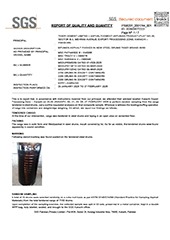
SGS Inspection Report Grade 35/50 Loading the Month of Jan-Feb 2026
Tiger Bitumen Price List
English Version
French Version